Bad Ass Bitches and assumed authority
At DynamicsCon we had our panel called Bad Ass Bitches.
The title wasn’t accidental. We chose it. We knew it would get attention, and we knew exactly what conversation we wanted to have. The session was about confidence, careers, leadership, and what it means to own your space in tech.
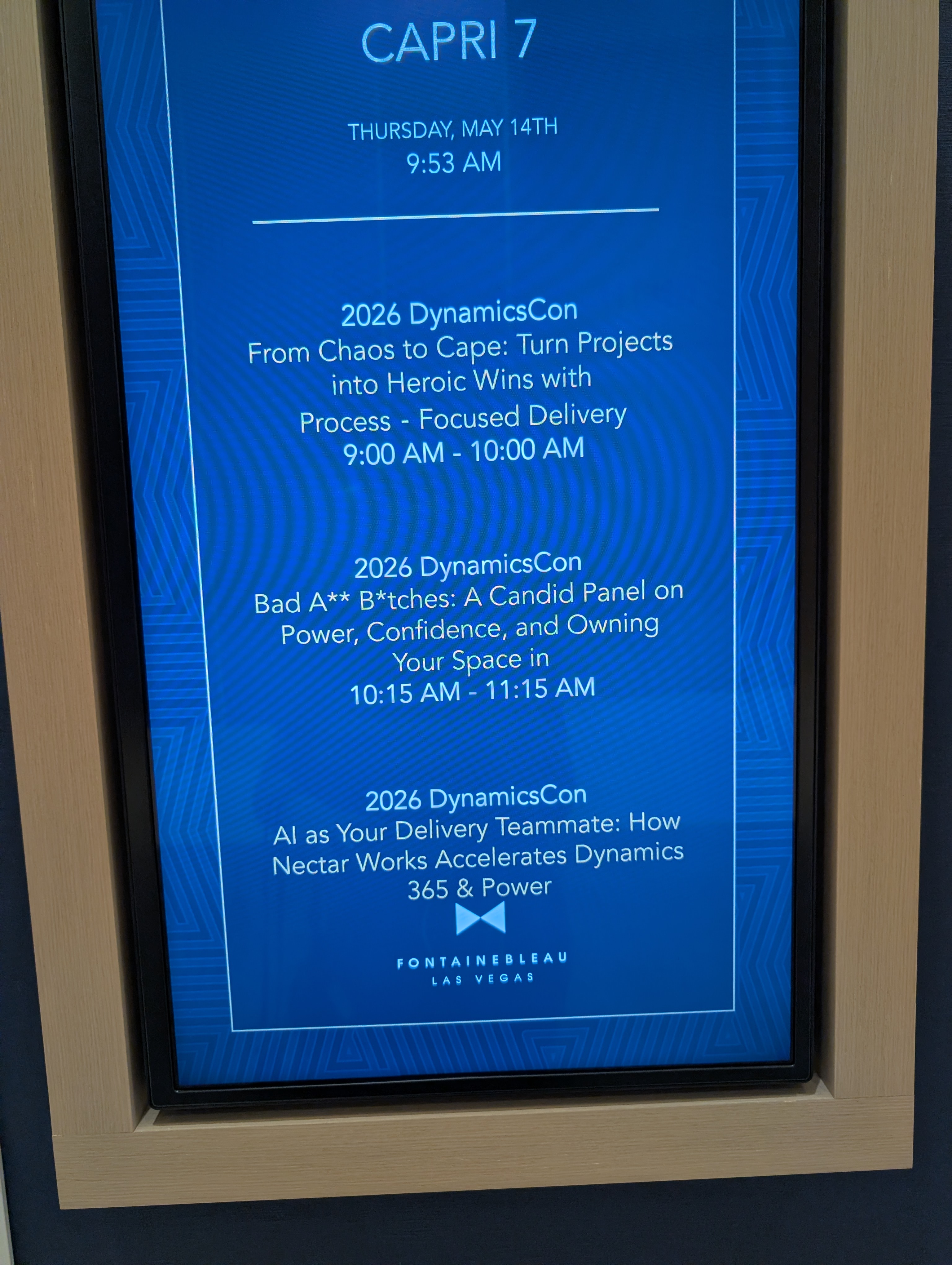
As we arrived at the session room, we saw the marquee that showed the sessions for the day in that space.
We were listed.
But it wasn’t listed as Bad Ass Bitches.
The hotel had changed it to Bad A** B*tches.
I laughed.
I took a photo.

The thing is, everyone knew exactly what it said. The asterisks didn’t hide anything. They didn’t change the meaning. They didn’t protect anyone from encountering a word they otherwise wouldn’t have seen. The title was still recognizable to anyone who glanced at the sign.
What stuck with me wasn’t the censorship itself.
It was the assumption behind it.
The conference organizers chose the title. The speakers chose the title. Attendees registered for the title. Yet somewhere between the conference schedule and the hotel display, someone decided it should be altered.
Not because they were responsible for the content.
Not because anyone had asked them to.
Simply because they were in a position to do it.
We’ve seen this before.
Not just at conferences.
In meetings. In organizations. In communities. In everyday life.
A person gets close enough to a decision that they begin to feel ownership over it. Someone has access to a system, a process, or a platform and starts making choices that were never really theirs to make. An opinion becomes a rule. A preference becomes a policy. A suggestion becomes a limitation.
I’m out here spending a lot of my time encouraging people to do the opposite.
Apply for the job before you’re certain you’re qualified.
Submit the session.
Raise your hand.
Start the thing.
Speak up.
The world doesn’t need more people sitting quietly in the corner waiting for permission to contribute.
So at first glance, these ideas seem contradictory. If I want people to stop waiting for permission, why would I be bothered by someone taking initiative?
Because initiative and authority are not the same thing.
The person who submits a conference session is claiming ownership of their own voice.
The person who edits someone else’s conference title is claiming ownership of someone else’s.
One creates something new. The other assumes the right to redefine what already exists that they don’t even own.
That’s a distinction I’ve been thinking about ever since I saw that sign.
The panel itself was fantastic. The room was full. People were engaged throughout the session, and several attendees came up afterward to continue the conversation with Ashley, Sam, and me. We talked about confidence, visibility, careers, setbacks, and all the complicated ways people learn to shrink themselves over time.
I can’t help but appreciate the irony.
A session about owning your space in the world was preceded by a small but perfect example of someone deciding how that space should be presented.
But, what opportunities, ideas, careers, conversations, or voices get smaller because someone else’s preference was treated as authority?
Being the loudest voice in the room and being the last person to touch a digital screen display are remarkably similar forms of influence.
Neither makes you right.
Neither makes you the owner.
Both can create the illusion of authority if nobody challenges it.
The title was still Bad Ass Bitches.
The asterisks never changed that.


Leave a Reply