Computer generated content is not copyright-able. Full-stop. Or is it? We talk about AI-generated content as if the important question is whether a human or a machine created it. That framing is tidy, but it is also too small. The more I work with AI-assisted writing the more I think the better question is about ownership and accountability: who shaped the idea, who guided the process, who made the judgment calls, and who is willing to stand behind the final piece?
For me, this is not a theoretical debate. It shows up in the messy middle of real work, where people bring lived experience, AI helps structure and challenge the thinking, and different tools contribute at different points in the process. The result can feel collaborative, useful, and deeply human—but it also makes the lines of authorship harder to draw.
Earlier this year, I went to DC to chat with decision-makers about tech policy. One of the stops was the U.S. Copyright Office, where I found myself in a conference room trying to explain an AI-assisted writing process.
It starts with Julie-ish.
Julie-ish is an agent I’ve trained to interview people the way I would. She’s nice. She’s supportive. She’s curious. And there’s a side of sarcasm, because that’s obviously a requirement if you’re going to pretend to be me.
Her job isn’t to interview me. Her job is to interview someone else, as if she were me, with the intent of eventually turning that conversation into a blog post. So the ideas and experiences come from the person being interviewed.
But the interviewer is an AI I’ve designed to behave like me. Julie-ish is the methodology used to interview like I would interview.
Then that interview transcript goes to Gio, my named ChatGPT guy. Takes the transcript, writes a story. In my voice. He’s been trained on my writing (thank you to 20 years of blog posts and all those books written before AI).
Gio likes to exaggerate.
So, then Claude reviews it, challenges it, fact-checks it.
Humans are making decisions throughout the process. Humans trained the AI, based on human experience and instructions.
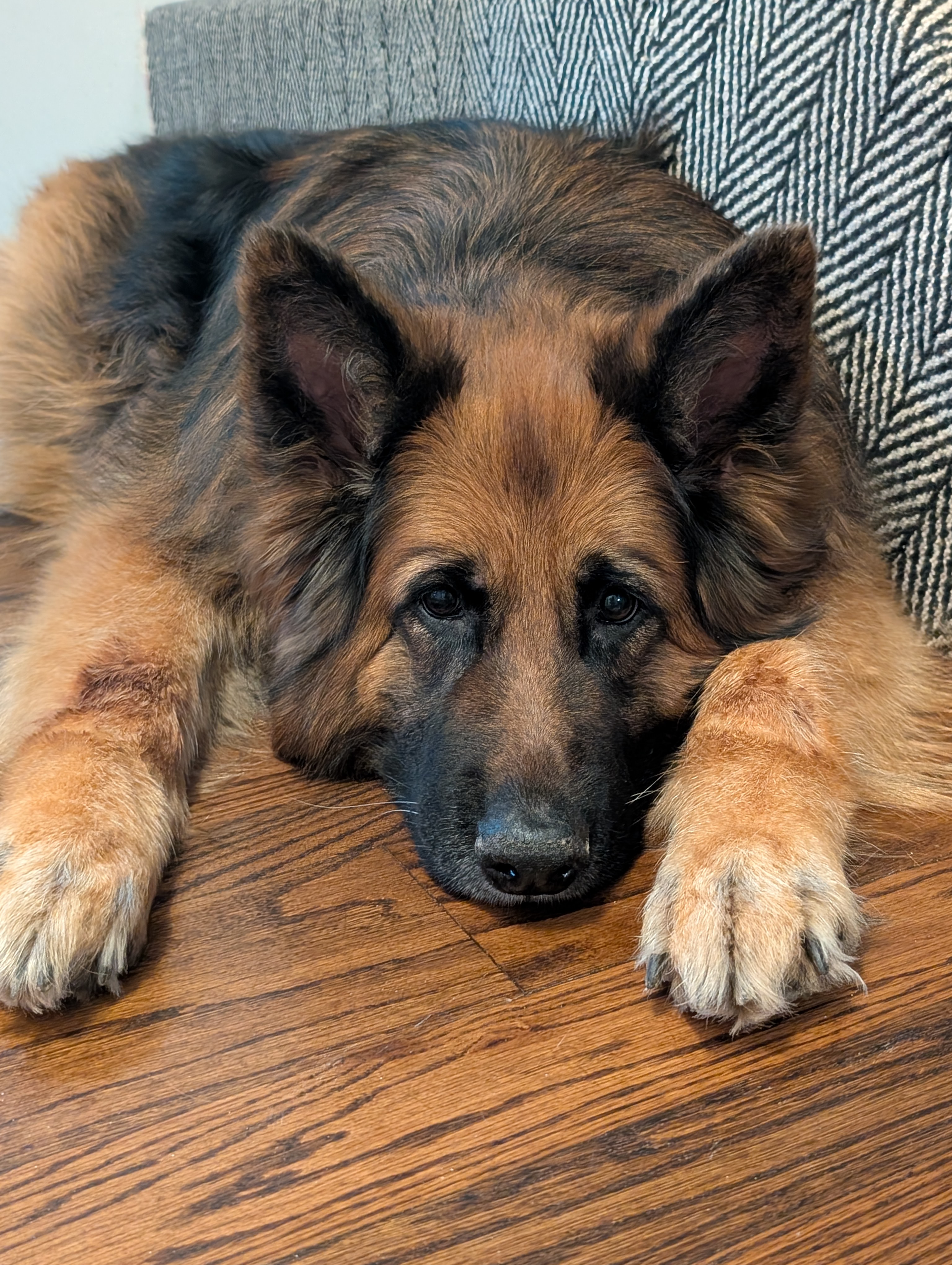
As I explained all of this, the people from the Copyright Office tilted their heads. Like Xena does when I say something she doesn’t quite understand — first the tilt, then the excited tail wag because whatever this is sounds promising, then the tilt again. Interesting. Exciting. What the heck.
That’s about where the room landed, too.
And that’s when it became obvious that the question of AI authorship is getting a lot more complicated than:
Did a human write this, or did AI?
Because…which human?
The person whose ideas and experiences are in the article?
Me, who designed an interviewer to extract those ideas in a particular way? Or the one that trained the AI to write like her?
The person who reviews the finished article and decides whether it actually represents what they wanted to say?
And then there are the AIs. The one conducting the interview. The one turning the transcript into prose. The one reviewing the result. Who wrote the article?
That’s an interesting copyright question.
But there’s another version of authorship that I think matters just as much.
Who is responsible for it?
Because authorship isn’t only about ownership. It’s also about accountability and traceability. Someone designed that process. Someone decided what each AI should do.
Someone decided what source material it could use. Someone reviewed what came out. Someone decided it was good enough to publish.
And someone ultimately put their name on it.
We’re building creative systems now, not just using creative tools. I don’t know who claims the output, and I’m no longer sure that’s the question I need answered. I do know who’s responsible for it. That’s me. That’s the part I can stand behind.
Judging by the head tilt that came after the tail wag, I’m pretty sure I’m not the only one sorting out the rest.


Leave a Reply